

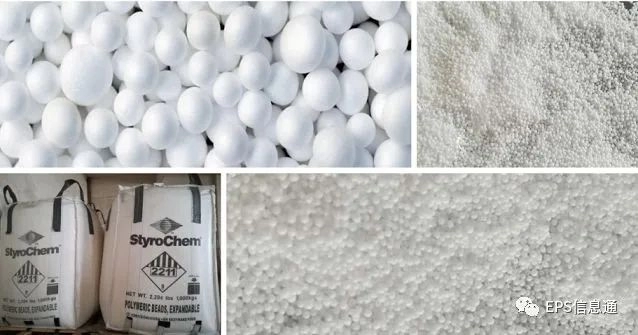
Most problems in an EPS foam order do not come from the factory. They come from the specification. A purchase order that says "EPS foam board, white" leaves the density, tolerance, and fire performance entirely to the supplier's discretion. When the container arrives, both sides have a different product in mind.
This guide covers what to pin down before you place an order, how to judge whether a factory can actually deliver the volume you need, and which commercial terms matter most when you are buying foam by the container.
Start with density, not price
Expanded polystyrene is sold by volume, but it performs by density. Two boards of identical dimensions can differ by a factor of two in weight, compressive strength, and thermal resistance. Density is the single specification that determines what the material is good for:
- Low density (roughly 10–15 kg/m³) — packaging inserts, void fill, protective corners, and lightweight display pieces. Low compressive strength, minimal structural role.
- Medium density (roughly 16–25 kg/m³) — the workhorse range. Suitable for most packaging applications, cold-chain boxes, and general insulation where loads are light.
- High density (roughly 26–35 kg/m³ and above) — building insulation, load-bearing fill under floor slabs, and precision protective packaging for heavy equipment.
Ask for the density in kg/m³ on the quotation, then verify it on arrival by weighing a sample cut to known dimensions. A difference of two or three kg/m³ is within normal process variation. A difference of eight is a different product.
Tolerance: the specification buyers forget
Foam is cut, not machined. A factory that quotes ±1 mm on a hot-wire cut part and a factory that quotes ±3 mm are offering two different products, and the price difference between them is often less than the cost of the rework created by the looser tolerance. State the tolerance explicitly on the drawing, and specify whether it applies to the cut face or to the overall envelope.
If your application involves assembly — inserting a cut foam insert into a box, or fitting boards between studs — tight tolerance matters more than density. If the foam is purely protective, a wider tolerance will save money without affecting the outcome.
Judging whether a factory can deliver your volume
Annual capacity is a marketing number. The operational question is how much capacity is available in the weeks you need it, and how the factory schedules its lines. Three checks are worth doing:
- Ask for the cutting equipment list. The number and type of CNC cutting lines, and whether the factory runs a continuous block line, tells you more about real throughput than a tonnage figure. A factory with nine CNC 2D/3D lines and a continuous three-station cutting line can absorb a mixed order of boards and shaped parts; a factory with two lines cannot.
- Ask about lead time in your specific month. EPS demand is seasonal, and lead times lengthen in the weeks before construction seasons in major markets. A supplier who quotes the same lead time in every month is quoting an average, not your order.
- Request recent production records for a comparable order. Batch records showing density checks and dimensions on an order of similar size and complexity are the most reliable evidence of capability.
Quality documentation: what to ask for and what it proves
An ISO 9001 certificate confirms that a quality system exists. It does not confirm that your boards were measured. The useful documents are the ones tied to your order:
- Raw material inspection records for the batch used on your production run
- In-process density and dimensional checks, with the sampling frequency stated
- Final inspection report referencing your specification, not a generic datasheet
- Third-party test reports if fire performance or thermal conductivity is a contractual requirement
Compliance with recognised industry standards — for example Chinese standards covering polystyrene board products and their application — gives you a baseline to cite in the purchase order. Cite the standard by number and state that non-conformance is grounds for rejection.
Commercial terms that shift real cost
Foam is bulky and light, so freight is a large share of landed cost and the terms you choose change the economics significantly.
Incoterms. FOB gives you control over the forwarder and the routing but leaves you managing booking and documentation. CIF is simpler but the freight cost is embedded and hard to compare between suppliers. For repeat business, FOB with your own forwarder usually produces the lower landed cost, because you can consolidate with other suppliers.
Loading efficiency. Because EPS is low density, containers cube out before they weigh out. The shape of what you order matters: boards that fill the container footprint neatly, and inserts designed to nest, will move more product per container than irregular shapes with wasted air. Ask the supplier to propose a loading plan and check the utilisation percentage. A ten per cent improvement in container utilisation is usually worth more than a five per cent discount on unit price.
Payment structure. A deposit with balance against the bill of lading copy is standard. Be cautious about requests for full payment before production on a first order; a staged structure protects both sides and is normal in this trade.
Samples and pre-production approval
Always approve a pre-production sample, and make the approved sample the reference for inspection. Photographs and datasheets do not capture surface finish, cut quality, or the exact shade of white — and white varies measurably between suppliers. Where colour matters, agree on a physical reference and keep a signed copy with both parties.
A first order should be treated as a qualification run: place a volume you can absorb, inspect it thoroughly against the agreed specification, and use what you learn to write a tighter specification for the next order. The second order is where the savings are.
Summary checklist
- Density stated in kg/m³, with a defined tolerance band
- Dimensional tolerance stated and applied to a defined surface
- Equipment list and month-specific lead time confirmed in writing
- Order-specific inspection records required, not just a system certificate
- Industry standard cited by number in the purchase order
- Incoterms chosen deliberately, with a loading plan and utilisation figure
- Pre-production sample approved and retained as the inspection reference
None of these steps is complicated. The difficulty is that they all have to be done before the order is placed, and each one that is skipped becomes a conversation about a claim after the container has already sailed.