

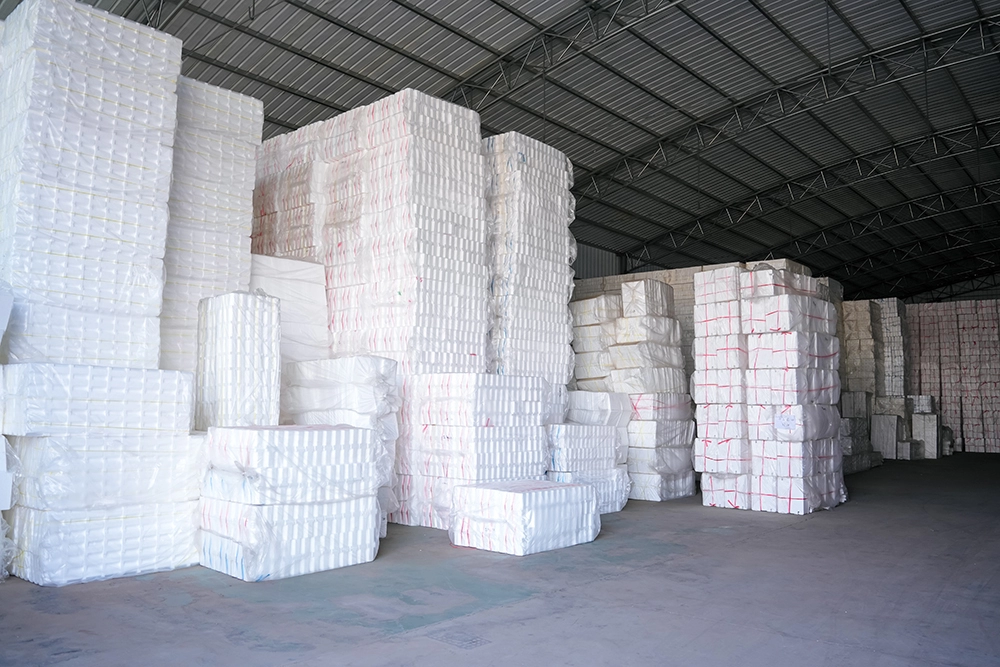
I believe that many of the readers here have had some exposure to knowledge regarding interior decoration and building materials; for these friends, polystyrene boards are likely a familiar concept. Also commonly referred to as "foam boards," these white building materials are primarily composed of expandable polystyrene beads containing volatile liquid blowing agents. These beads are subsequently heated and molded into shape. This type of foam board finds application in various areas, including thermal insulation for composite panels, roofing insulation, and thermal insulation for marine vessels. However, are you familiar with the specific advantages, disadvantages, and practical applications of polystyrene boards? In the following sections, I will introduce you to the pros, cons, and uses of polystyrene boards, with the aim of helping you gain a better understanding of this material.
Polystyrene boards are highly flammable; furthermore, when they burn, they generate pungent, unpleasant, and toxic gases. The smoke produced during the combustion of standard polystyrene boards is toxic; even when flame retardants are added to the material, its fire-resistance rating typically reaches only a Class B level. The quality of polystyrene boards can often be inconsistent. This is because the material typically requires a "curing" period after manufacturing—being left to sit for a certain amount of time—before it meets the necessary standards for user application. If uncured polystyrene boards are utilized prematurely, their quality cannot be adequately guaranteed, which may subsequently lead to cracking during actual use.
Due to the inherent limitations of its structural strength, polystyrene board possesses poor load-bearing capacity. Consequently, when using these foam boards as a substrate—particularly when attaching facing tiles—specific reinforcement measures must be implemented. Polystyrene board is relatively impervious to temperature fluctuations; under high-temperature conditions, it does not melt in response to excessive external heat, nor does it become brittle and prone to cracking in low-temperature environments. The material features a low surface water absorption rate and excellent resistance to moisture penetration. When installed on walls, polystyrene boards provide effective protection, ensuring that the wall surface remains free from issues such as dampness, mold growth, or material detachment over time. Furthermore, thanks to their lightweight nature, low density, and robust impact resistance, these foam boards are highly favored by many users; when subjected to external impacts, they can deform—and often even recover their original shape—thereby providing a cushioning effect that absorbs the force of the impact. Given its superior thermal insulation properties, expanded polystyrene (EPS) board is frequently utilized in construction as an insulating layer—specifically as an internal insulation layer. When employed as an *external* insulation layer, it effectively eliminates thermal bridging, thereby preventing condensation within the building structure. Furthermore, utilizing it as an external layer—positioned on the exterior of the building's main structural framework—and leveraging its considerable mechanical strength serves to extend the building's service life while simultaneously mitigating the structural deformation caused by fluctuations in the external environment.
Company Blog